Handling doxxing as a journalist comes down to four things in a fixed order: confirm the exposure, secure yourself and your sources, preserve the evidence, then escalate to people whose job is helping you. Almost all of the avoidable damage happens in the first hour, when people respond publicly before they know what is actually out there. The steps below run from the first ten minutes to the end of the first week.
Doxxing is the act of publicly compiling and posting someone’s private personal information, such as a home address, phone number, workplace, family details or financial records, usually to intimidate, silence or retaliate against them. The information is often assembled from scattered public sources rather than hacked, which is exactly why it feels so hard to stop.
Journalists are structurally exposed in a way most people are not. The Freedom of the Press Foundation makes the point plainly: newsrooms expect reporters to promote their work under their own names, and that same visibility is what makes them findable by someone with bad intentions. Bylines, named beats, staff directories, conference panels and public records all point the same direction.
Freelancers carry the same exposure with none of the infrastructure. No legal team, no HR department, no union rep, no insurer, and often no editor awake at midnight. This playbook is written for both, and the final section covers the freelancer path specifically.
Last reviewed in 2026. Laws, platform tools and data broker practices change, so treat anything specific to your state or your platform as something to verify with a lawyer before you rely on it.
What You Need
The first hour is not the time to be improvising. These five things should exist before anything happens, because building them during an incident costs hours you will not have.
- A clean, current device. A phone or laptop you have updated in the last week, with a screen lock, full-disk encryption and a unique password. Update it before the incident, not during it.
- Two secure communication channels. One mainstream account (email or SMS) so a newsroom can reach you, and one end-to-end encrypted channel such as Signal for anything sensitive. Assume the ordinary channel can be monitored.
- Password management and two-factor authentication. A password manager for every account, and hardware-key or authenticator-app two-factor on anything tied to your work email. SMS codes are the weakest option.
- An evidence storage plan. A folder, offline and not shared, where screenshots and saved posts go with a date attached. Decide the naming convention now. Later, you will not feel like being organised.
- At least three humans on speed dial. An editor or assignment editor, a newsroom security or digital safety lead, and one lawyer or legal support line you have actually contacted once before. The time to find a lawyer is not during an attack.
Two more help, and they are free. The Committee to Protect Journalists and the Freedom of the Press Foundation both run digital safety helplines for journalists at risk. A local mutual-aid legal defence group is worth knowing about too, since they move faster than commercial counsel on urgent filings.
If you are a freelancer, add one thing to that list: money set aside for a security audit or a lawyer. There is no version of this where a freelance journalist with no budget has the same options as a reporter with an employer.
Step-by-Step: How to Handle Doxxing as a Journalist
Run the steps in sequence. Working them out of order, most commonly by posting about it first, is the single most common way targets make an incident worse.
1. Confirm the threat and assess immediate danger
Find out what is actually published before you decide how to respond. Save the post, note the platform, the account, the date and time, and check whether the information is accurate. A post that is half wrong is still a post that made your address findable, but it changes what you say next.
Then separate three things that get conflated: exposure, harassment, and a threat of violence. Exposure is information published without your consent. Harassment is sustained contact aimed at wearing you down. A physical threat is a specific, plausible claim that someone will come to you or your family.
Treat the third category as real the moment it appears. Specific details, a named location, a time, or knowledge of something not published anywhere are all markers of a genuine threat rather than a cheap insult. So are swatting calls, messages to your employer, or a sudden, organised surge of contact from strangers.
Warning signs that something is coordinated rather than organic include a sudden jump in followers on a personal account, identical phrasing repeated across platforms, or a burst of unrelated contact from people who all arrived on the same day. If you cannot tell, ask someone outside the situation. A friend, a colleague on another beat, or a helpline will tell you within a minute what you cannot from inside it.
If there is any credible threat of violence, the rest of this plan matters less than getting to a safe place and contacting law enforcement. That call comes first, not last.
2. Protect yourself, your family, and your sources
Lock the accounts that can reach you before you lock anything else. Change passwords on email first, because a compromised email account is a way back into everything else. Turn on two-factor authentication everywhere that offers it, revoke active sessions, and remove any forwarding rules or app passwords you do not recognise.
Deal with the physical layer next, because the address is the payload in most cases. Data broker and people-search sites are where that address gets refreshed, so request removal from the major ones: Spokeo, Whitepages, MyLife, PeopleFinders, BeenVerified, Intelius, Radaris, and the rest. Yael Grauer’s Big-Ass Data Broker Opt-Out List on GitHub is the working reference here, and it is maintained rather than frozen.
Trial cancellations at those sites are cheap, and the sites are required in many states to honour a verified opt-out request. Expect removal to take days to weeks, and re-check in a month because fresh records surface from public filings.
Tell the people who live with you before the story travels further. A partner, a child, a roommate, an elderly parent. Give them the same facts you have, not the worst version, and agree on what happens if someone shows up at the door. Change door locks if you can afford it, and be realistic about how many other places are attached to that address: voter registration, property records, school enrolment, deliveries, and your spouse’s accounts.
Now think about sources, because this is the part a generic safety guide will not mention. Every person you quoted has just become more exposed. Consider whether the post reveals something identifying about your reporting, whether a source could be identified by exclusion now that you are a known target, and whether a deadline or an unpublished document makes re-contact urgent. Do not send a message that hints at the doxxing; assume any device you own can be read.
Finally, decide how to behave in public for the next few days. The strongest consensus across the safety resources is that a public reaction confirms the accuracy of the leaked details and signals that the tactic worked. A short delay rarely costs you anything. Silence costs you nothing at all.
3. Preserve evidence without spreading the doxxing
Capture first, act second. Screenshot the full post including the account name, handle, bio, follower count and posting time, and do the same for every comment thread. Archive the page if the platform offers it, and save the URL in full. Screenshots alone can be challenged later; an archived page with a timestamp holds up better.
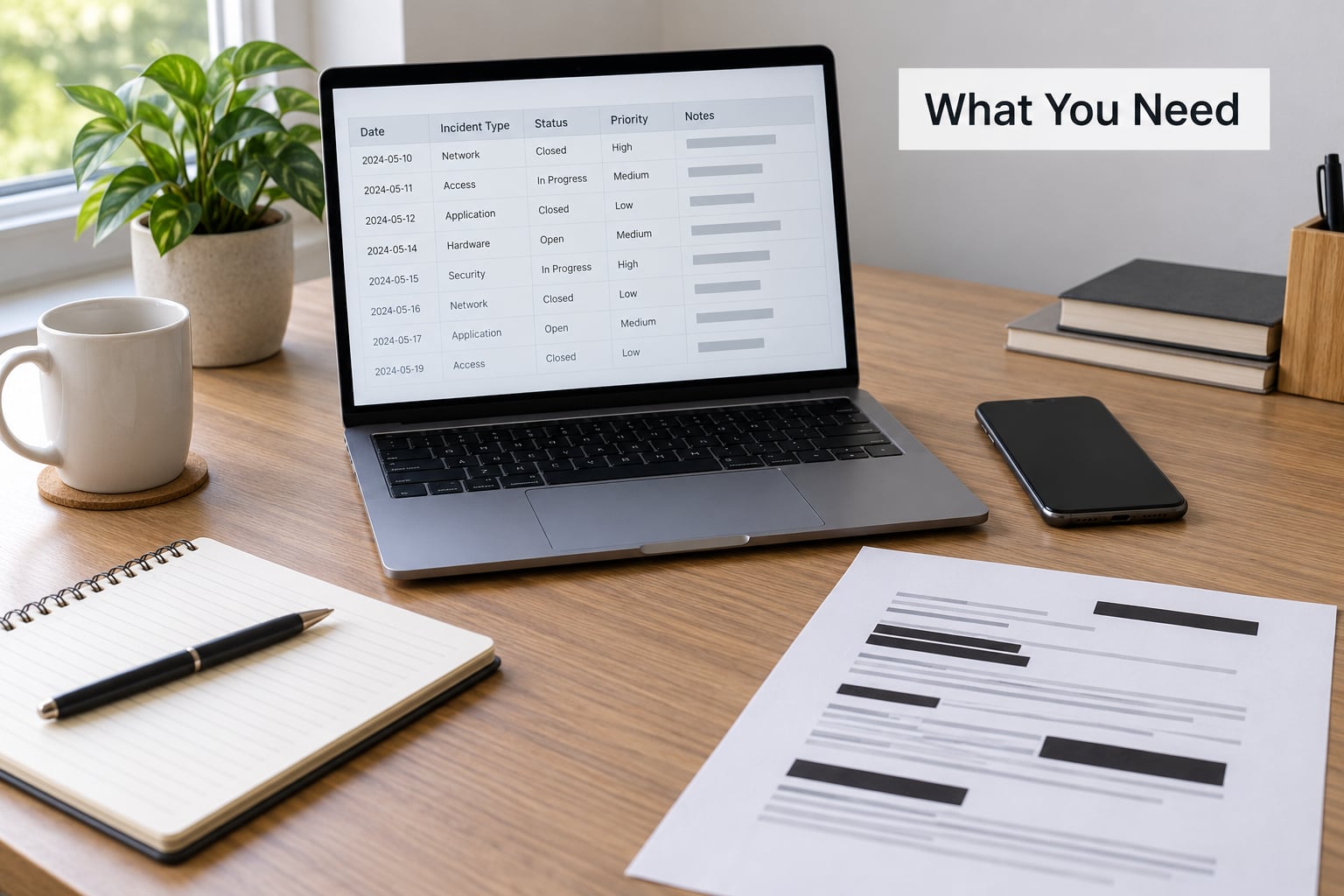
Keep an incident log with one row per event: date, time, platform, account, what was posted, what action you took, what happened next. A simple spreadsheet works. This is the document a platform, a lawyer, an insurer, a union rep or a police officer will all ask for, and reconstructing it from memory three weeks later is miserable.
Record the technical details that tend to disappear: the post ID from the page source, the account’s creation date if it is visible, and the timing of the first contact. Patterns across dates are often the only thing that shows an attack is ongoing rather than a one-off, and that pattern is what convinces a platform to act on a report.
Do not engage the accounts. No replies, no likes, no quote-posts, no following the profile back to watch it, no screenshots posted anywhere public. Every interaction adds an analytics event, confirms you read it, and can be used to argue the content is newsworthy because it drew a reaction.
Strip metadata from anything you do share internally. Screenshots of your own documents and photos can carry location data, and forwarding them carelessly through a newsroom chat adds another copy you will never find.
4. Report and request removal responsibly
Use the platform’s own reporting flow and pick the category that matches what happened: sharing personal information, or doxxing, where that option exists. On Facebook and Instagram, that is the Personal Attack or Sharing Private Information category, and you can attach the incident log. On X, report the post for private information or abusive content. On Reddit, use the report menu on the post itself and also report the account, since a suspension on one does not always carry to the other.
Write one short, factual description you can reuse across platforms. State what personal information was published, that you are the person named, and that publication is not consented to. Leave out the argument about your journalism. Platform reviewers do not adjudicate the underlying story, and a message that reads as advocacy gets closed unread.
Know the honest expectation here. People running these reports describe the same pattern repeatedly: posts containing accurate information, with no threat attached, often stay up. Removal is most likely when a threat, a doxxed minor, or a swatting risk is involved. Treat takedowns as one track among several, not the track that ends this.
Track what you submitted and when, in the incident log. If a post survives a report, a takedown request to the hosting provider is the next step, and for material that crosses into extortion, threats, or identity theft, that is the point where a lawyer’s letter or a complaint becomes the better tool.
5. Escalate through your newsroom and support network
Tell your editor the same day. Not because you need permission, but because the newsroom has things you do not: media liability insurance, outside counsel on retainer, a communications person, a security consultant, and in a serious case a duty of care obligation. The conversation you want is short and concrete.
Bring five things: the incident log, the archived posts, the date you discovered it, the pattern you see, and what you have already done. Then make three specific requests. Legal review of a threat or a claim of unlawful publication. A security audit of your accounts and devices. A decision on whether the story in question is still publishable, and at what risk.
Escalate outside the newsroom when the newsroom cannot carry it. The Committee to Protect Journalists and the Freedom of the Press Foundation run digital safety helplines. Legal defence funds handle urgent filings, and they move much faster than a retainer letter. If you cover a beat where hostility runs organised, a specialist monitoring service that alerts you when your details appear on a new site is worth the cost.
Do not call police as a first reflex. Reports about doxxing without a threat are frequently treated as civil disputes, and several US states have enacted specific anti-doxxing statutes, including California, Colorado, Florida, Minnesota, New York, Oklahoma, Texas, Virginia and Washington. Those statutes criminalise the intentional publication of personal information from a covered actor with intent to threaten or intimidate, and they vary widely in what counts as a covered actor, what information is protected, and what penalty applies. None of them is a substitute for a local lawyer’s read on your specific facts.
Call police when there is a threat of violence, a swatting, stalking, an extortion attempt, a threat aimed at a child, or identity theft in progress. Bring the incident log and the archived posts. Get the case number and the name of the officer, because you will need both to follow up.
If you are a freelancer, replace every newsroom reference above with: a lawyer you retain yourself, a peer group of other freelancers, a press freedom helpline, and your commissioning editor. Ask the commissioning editor in writing what support the commission covers. That single written answer tells you a lot about what happens next time.
6. Plan the next reporting and security steps
The incident does not end when the post comes down. Decide three things over the following week.
First, physical changes. Some targets relocate temporarily, which is a normal and under-discussed response rather than an overreaction. If you are considering it, talk to a helpline before you commit, and remember that a move is only useful if the new address is not registered, subscribed or listed anywhere the old one was.
Second, sources. Decide which people need a warning, and which need a new route of contact. If your reporting depends on a document or a source who is now identifiable by proximity to you, that is a live risk to someone who trusted you, and it needs a plan rather than a decision made in a panic.
Third, the story. Some stories should be delayed, some should be published with heavy caveats, and some should be killed. Those are editorial calls, and they get made better with a threat assessment in front of you than without one. Ask your editor for a written rationale either way, because that record protects you if the decision is questioned later.
Then look after yourself, deliberately and not as an afterthought. Isolation is part of the tactic, not a side effect of it. Tell two people the real version, keep reporting your own beats, and if fear follows you for more than a few weeks, that is a clinician conversation rather than a weakness. A cooling-off period of not covering the same topic for a month is normal practice, not a lapse.
Common Mistakes
These are the errors that show up over and over, and each has a straightforward correction.
- Arguing publicly. A reply thread brings an audience the post did not have and confirms every leaked detail. Fix: take the screenshot, report the content, walk away. A press statement, if one is needed, comes later and says nothing about your safety.
- Deleting everything immediately. The first instinct is to make it stop existing, and the posts often reappear on other accounts within hours. Fix: screenshot and archive first, log it, then request removal.
- Contacting the doxxer. Direct contact invites a private channel where escalation, and evidence destruction, are easy. Fix: no replies, no engagement, no following. Let the platform and, if relevant, the police handle contact.
- Exposing source details to prove you are a real journalist. Credential documents usually carry names, editors and contact details, and they rarely prove anything to a determined attacker. Fix: establish your credentials with a lawyer or a press freedom organisation, not with a stranger.
- Waiting to see if it escalates. Assuming it is a phase that will pass wastes the one window where broker removals, account locks and takedown requests are cheap. Fix: act in the first day.
- Relying on one tool. A VPN, or a data removal subscription, or a pseudonym does not remove your address from a public property record. Fix: layer them, and accept that no product makes you unfindable.
- Telling only your editor verbally. An unrecorded conversation leaves no trail for an insurer or a lawyer. Fix: put the notification and your requests in writing, even if it is an email to a person you sit two desks from.
- Assuming it is about you alone. The first wave often targets a partner, a child or a source rather than the reporter. Fix: check on everyone connected to the exposed address in the first hour, not later.
One last thing worth saying plainly, because the comment sections get loud about it: the argument over whether journalists should ever publish identifying information about someone is real, and it is separate from this. A newsroom policy that sets a clear threshold, requires a source-level justification before publication, and names an editor who signs off is worth more to your safety than any product you can buy.
Frequently Asked Questions
How do you know if you are being doxxed?
You are probably being doxxed if your home address, personal phone number, workplace, or family details appear together in a public post, a video, an image, or a new account you have never seen before. Other signs include a sudden jump in followers, a burst of strangers contacting you on the same day, or identical messages appearing across several platforms at once. Screenshots and a timeline matter more than any single post, so start an incident log the moment you see one of these.
What should I do first if I am doxxed?
Screenshot the post, archive the page, and start an incident log before you do anything else. Then secure your accounts, changing your email password first and turning on two-factor authentication everywhere. If there is any specific threat of violence, a swatting reference, or a message aimed at your family, that overrides everything else: move somewhere safe and contact law enforcement immediately. Do not reply publicly, and do not delete the posts before they are recorded.
When should a journalist contact the police?
Contact police when there is a specific threat of violence, a swatting call, stalking, an extortion attempt, a threat aimed at a child, or identity theft in progress. Reports about doxxing with no attached threat are often treated as a civil dispute, so a police report may produce little on its own. Several US states now have specific anti-doxxing statutes, but their scope varies widely, so a local lawyer is the right person to tell you whether one applies to your case.
How do I report a Facebook or Instagram post for doxxing?
On Facebook and Instagram, open the post, use the three-dot menu and choose Report Post, then select the category covering private information or personal attack. Paste a short factual description saying the post publishes your personal information without consent and that you are the person named, and attach your incident log. Do not argue the journalism in the report. Report the account separately from the post, and keep a record of the date, time and reference number each submission generates.
How do I report someone on X for doxxing?
On X, open the post, use the three-dot menu and choose Report post, then pick the option for private information or sensitive information. Repeat the same for each reposting account rather than only the original, since removals do not always carry to reposts. Save the URL and the account handle to your incident log before you report, because the post can be deleted within minutes of a report. Escalate to a takedown request or a lawyer if a threat or extortion is involved.
How do I protect my sources after being doxxed?
Assume the risk calculus for everyone you quoted has just changed. Review whether the post reveals anything about your reporting, whether a source could now be identified by exclusion, and whether any unpublished document makes them more vulnerable still. Contact them through a channel you already trust, not through anything owned by the account that was compromised, and assume every device you own can be read. Where a deadline is involved, re-contacting a source may be worth the risk rather than leaving them exposed.
Conclusion: Start with Safety and Evidence
The first four actions in any doxxing incident are always the same. Find out what is actually published, lock down your accounts and your address, screenshot and log everything, and bring in someone with more resources than you have. Everything after that, from platform reports to legal letters to deciding whether a story still runs, goes better once those four are done.
That is how to handle doxxing as a journalist in practice: confirm, secure, log, escalate, in that order, and resist the urge to answer the people who want you frightened. If you only do one thing this week, set up the evidence folder and the three phone numbers. It is the part that is impossible to improvise.
Journalists who get this right share one habit: they decided what to do before they needed to. A password manager, an encrypted messaging app, an evidence folder, a lawyer’s number in the phone, and a colleague who knows what to check. It costs an afternoon. It is the difference between a bad week and a bad year.