A takedown request is a formal complaint asking a host, platform or search engine to remove material that the sender says infringes copyright, trademark, privacy or another right. Handling one means logging it, checking whether it is valid and complete, deciding what to do about the material, and writing down the outcome. For most newsroom teams the whole cycle fits inside three working days of effort, spread over a few weeks of waiting.
Most people get how to handle a takedown request wrong in the first hour, usually by deleting something or by replying too quickly. The fix is to treat it as a workflow with an owner, a deadline and a written decision, and this guide walks that workflow end to end. It applies whether the request arrived about a photo, a news app, a scraped dataset, a map layer or a line in a story. It is a process description, not legal advice; the moment a request involves a lawsuit threat, a large advertiser or a source’s safety, hand it to a lawyer.
Table of Contents
- What You Need
- Step-by-Step
- Common Mistakes When Handling a Takedown Request
- Frequently Asked Questions
- Who should receive a takedown request at a newsroom?
- Do I have to remove my content immediately?
- What evidence should I preserve before responding?
- How long does a counter-notice take to restore content?
- How is a DMCA notice different from a cease and desist letter?
- What happens if the claimant is anonymous or unidentifiable?
What You Need

Handle a takedown request properly and you mostly need paperwork that already exists. None of it takes more than a morning to assemble, and assembling it before the first notice is what separates a calm week from a scramble.
Here is the set I would want on the desk when the email arrives:
- A single intake address. One mailbox that routes to a named owner, plus a backup. Give it out in your footer and on your corrections page so senders do not guess.
- The original request, unedited. Forward it to the case file as received, with full headers. Senders edit notices after the fact more often than people expect.
- What the claim asserts. Copyright, trademark, privacy, defamation, misinformation, safety or an ordinary platform rule. Each one points to a different evidence set.
- The exact asset in dispute. A URL or app build ID, not a general grievance. Record the capture time.
- Evidence of your own right to publish. Assignment emails, licence receipts, release forms, original camera files with intact metadata, assignment letters, and the timestamped publication record.
- Your editorial and sourcing policy. The document that says how you balance newsworthiness against harm, and who signs off when those two pull in opposite directions.
- A named escalation list. Editor, standards editor, legal counsel, the engineer on the relevant product, the data or product owner, and whoever holds the records.
- Deadline tracking. Notice response clocks and counter-notice windows differ by platform and by jurisdiction, and they start running before anyone noticed.
Two things are worth separating right here. A takedown request is an automated or semi-automated complaint to a service. A cease and desist letter is a letter from a lawyer that runs on a different clock and a different risk profile. Treating one as the other wastes weeks.
Step-by-Step
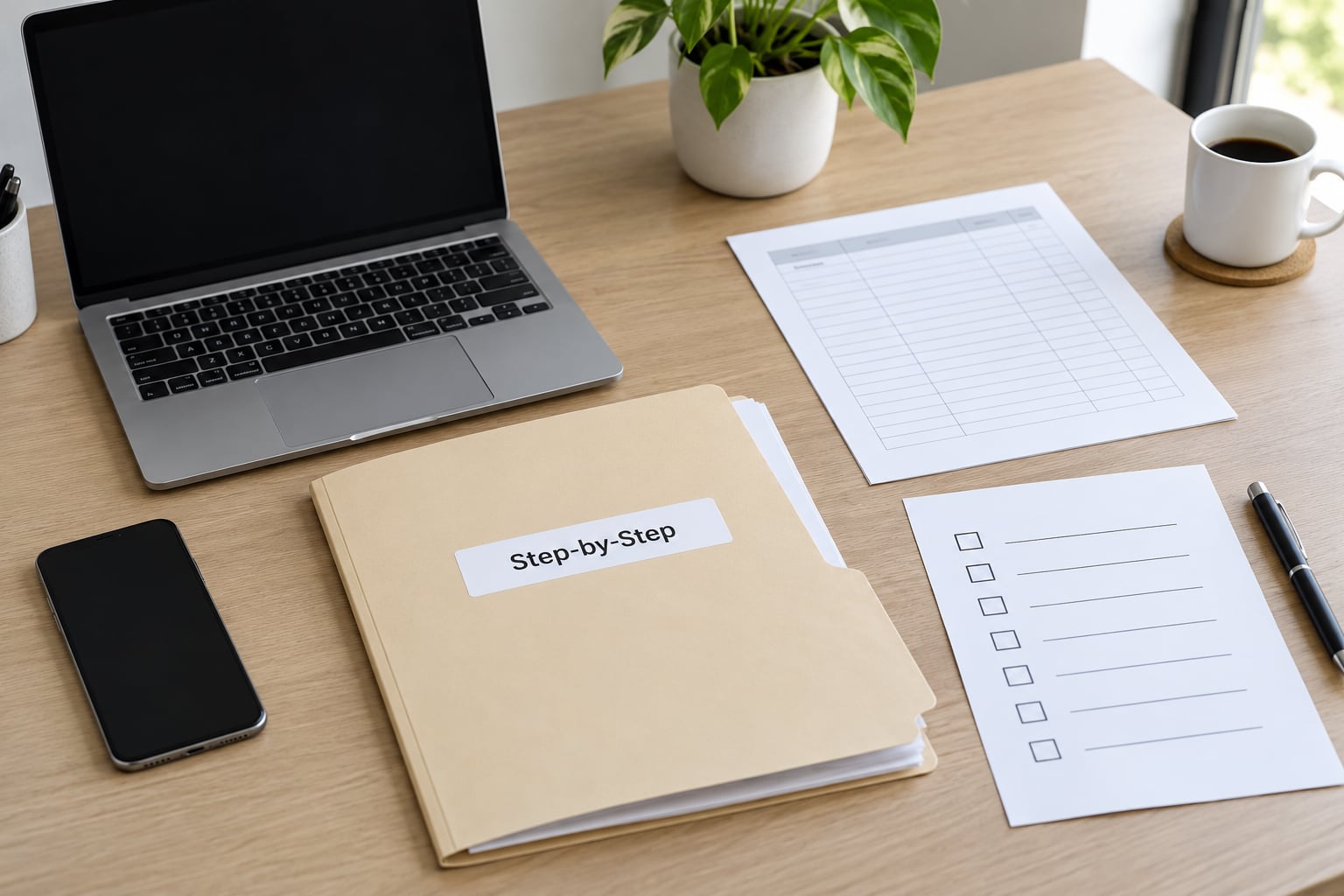
Below is the workflow I would give a new editor on their first week. Each step names who owns it and what “done” looks like, because most mishandled takedowns fail on ownership rather than judgement.
1. Acknowledge and log the request
Log it the day it lands, even if you have not read it properly yet. The log entry needs a case ID, the date and time received, the channel it arrived through, the sender’s stated identity, the assets named, the deadline asserted, and the owner assigned.
Preserve the original before you touch anything. Save the raw message with headers, the attachment as it arrived, and any platform notice verbatim. If it came through a dashboard, screenshot the dashboard.
Then send a neutral acknowledgment. One short paragraph: you received the notice, here is your case reference, here is who is reviewing it, here is when you expect to respond. No apology, no admission of liability, no promise to restore or remove, no opinion on whether the claim is valid. You are confirming receipt of a document, not agreeing with its contents.
How you know it worked: the case file holds an unedited copy, the owner has read the notice end to end, and the acknowledgment asks for nothing and concedes nothing.
2. Verify the requester and the claim
You are checking that the person asking has the standing to ask, that they are describing something you actually published, and that the request contains what the mechanism requires.
Start with the claimant. Does the name match a real rights holder, an agent, or a law firm? Is the contact address live? If the notice cites a copyright registration number, look it up in the public register and confirm the named work. If the claimant is anonymous or untraceable, note that fact in the file. It does not remove your obligation to respond, but it changes how much weight the claim carries.
Then check completeness. A notice under 17 U.S.C. § 512(c) is expected to identify the copyrighted work, identify the infringing material and its location, supply contact details, include a statement of good-faith belief, and carry a statement made under penalty of perjury that the notice is accurate and that the sender is the rights holder or authorised to act. Missing elements are a strong signal that the sender has not read the form, and platforms vary in how they treat an incomplete notice.
Finally, check the fit. Does the complaint describe the thing you published, or a different asset with a similar title? A recurring mix-up in newsrooms is an agency claiming a photo it licensed for one story against a different story where the same photographer shot the subject.
How you know it worked: you can name the claimant, the basis of their claim, the specific asset, and the deadline, each with a source you can point back to.
3. Preserve evidence and freeze relevant changes
Freeze before you investigate. Deployments, CMS edits and app releases routinely destroy the context you need ten days later.
Capture what exists now: full-page screenshots with the URL bar visible, the page HTML, the published timestamp, the metadata and EXIF data of any image, the API response behind an interactive piece, the relevant application and access logs, the deployment history for the app or code that rendered the asset, and the permission or feature flag that controlled access.
If you want to prove a file was not altered, record a cryptographic hash of each original alongside a copy on separate storage. It sounds fussy. It is also the difference between an assertion and evidence when a claimant alleges that the source document was doctored.
While you are there, put a hold on the item itself. Restrict it rather than delete it. Removal is irreversible, deletion destroys the record of what was live, and a reversal later is easier from a restricted state than from nothing at all.
4. Identify what is actually at issue
Sort the claim before you respond to it. Most mishandled cases are a privacy or defamation claim answered with a copyright argument, or a trademark complaint answered with a fair use essay.
Copyright claims turn on whether you copied protectable expression and whether an exception applies. Trademark claims turn on consumer confusion and use in commerce, not copying. Privacy claims are strongest when you published personal data that the claimant never intended to make public, and they often resolve with a correction, a redaction or a takedown rather than a fight. Defamation claims carry a higher bar and a different standard of review. Safety claims, which include anything involving minors or identifying a victim, usually end with removal no matter how strong the reporting.
Many notices are platform policy rather than law. A moderation complaint about sourcing standards or manipulated media is handled under your own policy, and your editorial code is the governing document.
How you know it worked: the file contains one sentence naming the claim type, the evidence you need for it, and the decision-maker for it.
5. Conduct editorial, technical and legal review
Run the review in parallel rather than in sequence, because the clocks are running on more than one of them.
The editor assesses newsworthiness: what does the story contribute, and what does the audience lose if this goes dark. The reporter reconstructs the sourcing: what was relied on, what was verified independently, what is documented in the record. The developer or data owner confirms the technical facts: where the data came from, what was transformed, what was published raw and what was not. The legal or privacy adviser tests exposure, and the records custodian confirms the evidence package is intact.
Bring in outside counsel when the claimant is represented, when statutory damages are plausible, when the material touches an ongoing litigation or a source’s safety, when the claim names multiple works in a campaign pattern, or when your own counter-notice will make a statement under penalty of perjury. That last one matters more than people expect.
Go to the platform’s own process, rather than back to the claimant directly, when your public form and counter-notice route cover the situation. Escalation paths exist and they are usually faster than email.
6. Choose and communicate the outcome
Choose the outcome that matches the claim type you identified in step 4. The realistic options are removal, restriction, correction, annotation, retention, or escalation.
Retention is more common than people assume. Newsrooms routinely keep material that a claimant wants removed because the record matters more than the comfort of the claimant, and the correct response then becomes a counter-notice with the reasoning attached.
Whatever you choose, write the decision down with the date, the reasoning, the people who signed off, and the evidence relied on. Then send a factual response: what action you took, on what date, what you did not do and why, and how the claimant can seek reconsideration or appeal. State the facts once and do not repeat yourself. Every additional sentence is something you may have to defend.
How you know it worked: the decision is written, approved and sent, and the recipient knows exactly what happens next.
7. Close the request and monitor follow-up
Close the loop deliberately. Mark the case resolved in the log with the outcome and date, store the evidence package and decision record together, and confirm that the technical change actually took effect: page returns, cache cleared, app build correct, search result updated.
Notify the teams who need to know, such as the audience desk, the ad sales side where revenue was affected, and the reporter whose work is affected. If a source is named in the material, you may need to tell them before the public does.
Then watch. Repeat claimants are worth logging as a pattern, and a second notice about the same work inside thirty days is a signal about the first response. Track any deadline that runs past the closure of the case, because restoration windows and appeal windows both expire silently.
Common Mistakes When Handling a Takedown Request
These are the errors that create legal, editorial and technical risk. Each has a straightforward correction.
Deleting first, deciding later
Removal before review destroys the evidence, removes your ability to counter-notice and hands the claimant the outcome. Restrict the item, keep it in place, and decide on the record. When you must take content down pending review, say so explicitly in the log.
Confusing a request with a court order
A takedown request is a complaint to a service. A court order is a court order, and so is a properly issued legal process with a case number and a judge. Treating a form submission as binding legal process leads to panicky and often unlawful responses. Read what you actually received.
Missing the deadline
Deadlines start on receipt, not on comprehension. Most platforms will accept a response late, and the consequence is usually continued removal rather than a penalty, but late answers quietly become permanent ones. Put every asserted deadline in the calendar on day one and set a reminder at two-thirds of the window.
Letting one person or one automated system decide
A single moderator or a matching script can treat a photograph licence and a news photograph as the same object. Automation is useful for routing and for spotting repeat claimants; it is not a decision-maker on a fair use question. Route anything non-obvious to a person, and record that a person decided.
Replying in the heat of the moment
Abusive claims exist and they are worth fighting, but the response goes on the record and can be shown to a court later. A claimant suppressing criticism is a pattern you can document, not something you want to accuse of in a first email. Respond once, factually, and keep the tone flat.
Exposing private information in the response
Attaching your evidence to a response email can hand over source identities, unpublished documents or internal notes. Use redaction, send evidence through a secure channel, and check that your counter-notice contains nothing the public should not read.
Not recording the outcome
The most common failure has no legal drama attached. Nothing was decided, nobody wrote down why, and the next notice about the same work restarts the whole argument. A dated decision record with an approval is worth more than a year of memory.
Here is roughly how the timeline runs when a notice goes to a large platform, so the waiting feels less open-ended:
| Point in the cycle | What usually happens | What you do |
|---|---|---|
| Day 0 | Notice received by the platform or by you | Log, preserve, acknowledge |
| Days 1 to 2 | Content disabled or restricted, uploader notified | Freeze and capture evidence |
| Days 2 to 5 | Claim forwarded to the claimant for review | Verify identity and completeness |
| Days 5 to 10 | Counter-notice window, where one exists | Decide and file, or record the retention decision |
| Days 10 to 14 business days | Claimant’s window to file suit after a counter-notice | Track the date; no action if they do not sue |
| Day 15 onward | Restoration, or escalation to a formal dispute | Confirm the change took effect, then close |
Frequently Asked Questions
Who should receive a takedown request at a newsroom?
Route notices to one named intake address owned by the standards or legal editor, with the relevant editor, reporter and engineer copied. Single ownership matters because deadlines run from receipt, and a request that sits in a shared inbox for four days is already late. Give that address out in your corrections page so senders use it, and log every notice the same way regardless of which desk it arrives on.
Do I have to remove my content immediately?
Usually no, but not always. A notice under a copyright policy starts a process, not an automatic obligation to delete, and most platforms expect a review rather than instant compliance. Exceptions are real: safety claims involving minors, court orders, and certain privacy removals call for prompt action. Restrict rather than delete while you review, so the evidence survives and a later reversal is easy.
What evidence should I preserve before responding?
Capture the item as it exists now: full-page screenshots showing the URL, the page HTML, the published timestamp, image metadata, the code or build that rendered it, and relevant access and deployment logs. Keep your own provenance too, including original files, assignment emails, licences and releases. Hash the originals if the claim alleges that a document was altered, and store a copy away from your working environment.
How long does a counter-notice take to restore content?
On major platforms, a counter-notice is forwarded to the claimant, who then has roughly ten to fourteen business days to decide whether to file suit. If they do not, the content is typically restored after that window expires. The restoration itself is usually quick, but search indexes, caches and app releases take longer to catch up. Treat the business-day window as the deadline to track, not the day the content returns.
How is a DMCA notice different from a cease and desist letter?
A DMCA notice is a statutory complaint to a service provider, made under penalty of perjury, that triggers the safe harbour process and a counter-notice window. A cease and desist letter is private correspondence, usually from a lawyer, that warns you of legal action but goes through no platform process at all. Both can arrive together. The letter changes the risk calculus and should reach counsel immediately, while the notice is handled through the platform’s channel.
What happens if the claimant is anonymous or unidentifiable?
You still have to process the request, but the claim carries less weight and the platform may reject an incomplete notice. Record the anonymity in the file rather than ignoring it, since a pattern of anonymous claims against the same outlet is itself a useful signal. Do not attempt to trace the sender through pretexting or unlawful means. Your response stays neutral and factual, and you decline on the merits rather than on the sender’s identity.
The first thing to do when a notice lands is to log it, preserve the original message and take the asset offline or behind a restriction rather than deleting it. Everything after that is a review with a deadline and a written outcome, which is a much easier problem than one where the evidence has already disappeared.