A beat memo is how you show an editor you already understand a beat before you cover it. In practice it is a one to two page document that sets out what the beat covers, who your sources would be, which documents and data you would chase, and what you would try to publish first. Knowing how to build a beat memo comes down to six steps, and the whole thing takes an afternoon once your notes are in order.
If you searched for this and landed on pages about music production or corporate memos, this is the right guide. Here we are talking about beat reporting in a newsroom: the recurring territory a reporter is responsible for, such as city hall, schools, health or the environment.
What You Need Before You Draft a Beat Memo
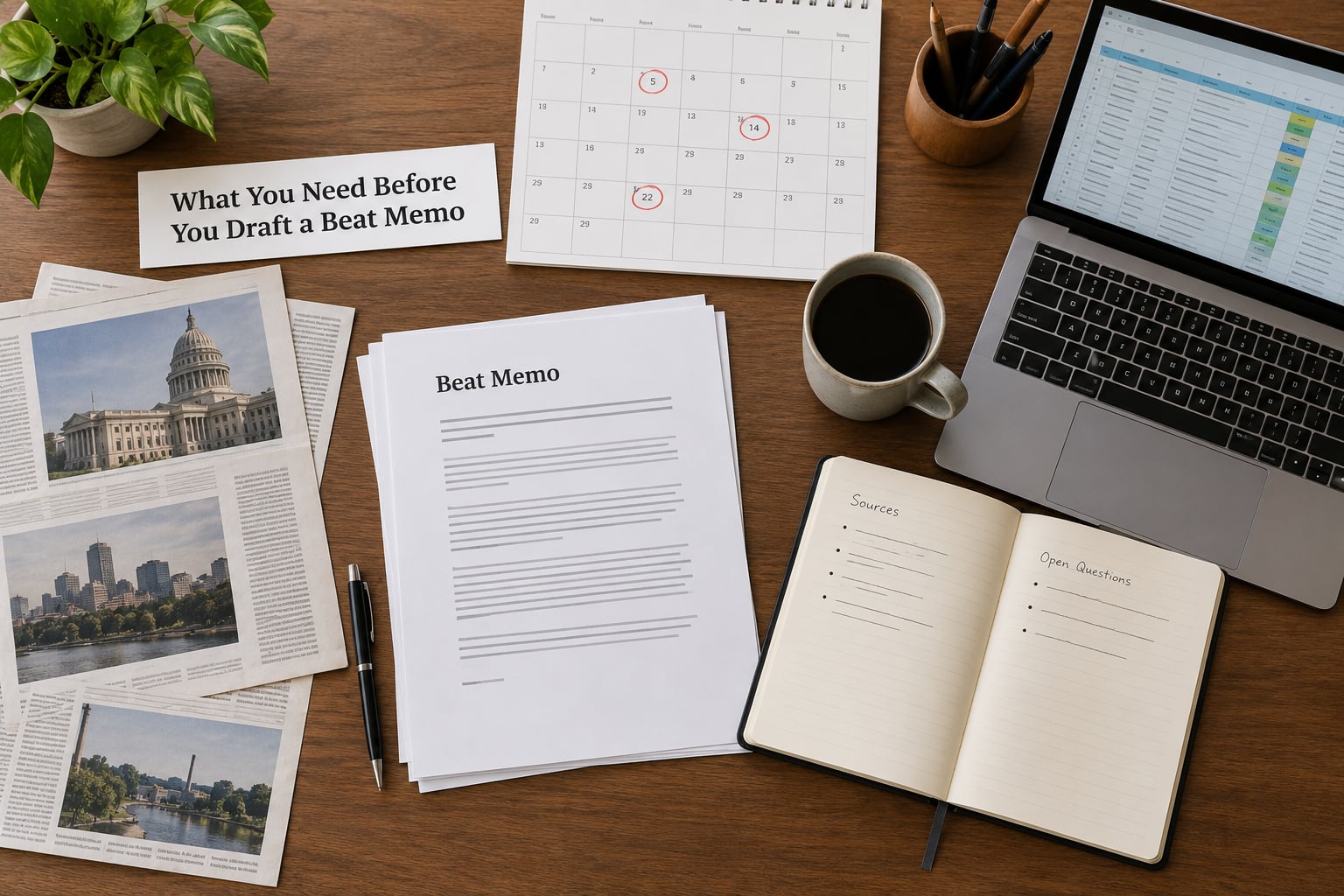
Drafting from scratch is the slow way. Spend an hour or two collecting raw material first, and the memo writes itself in sections.
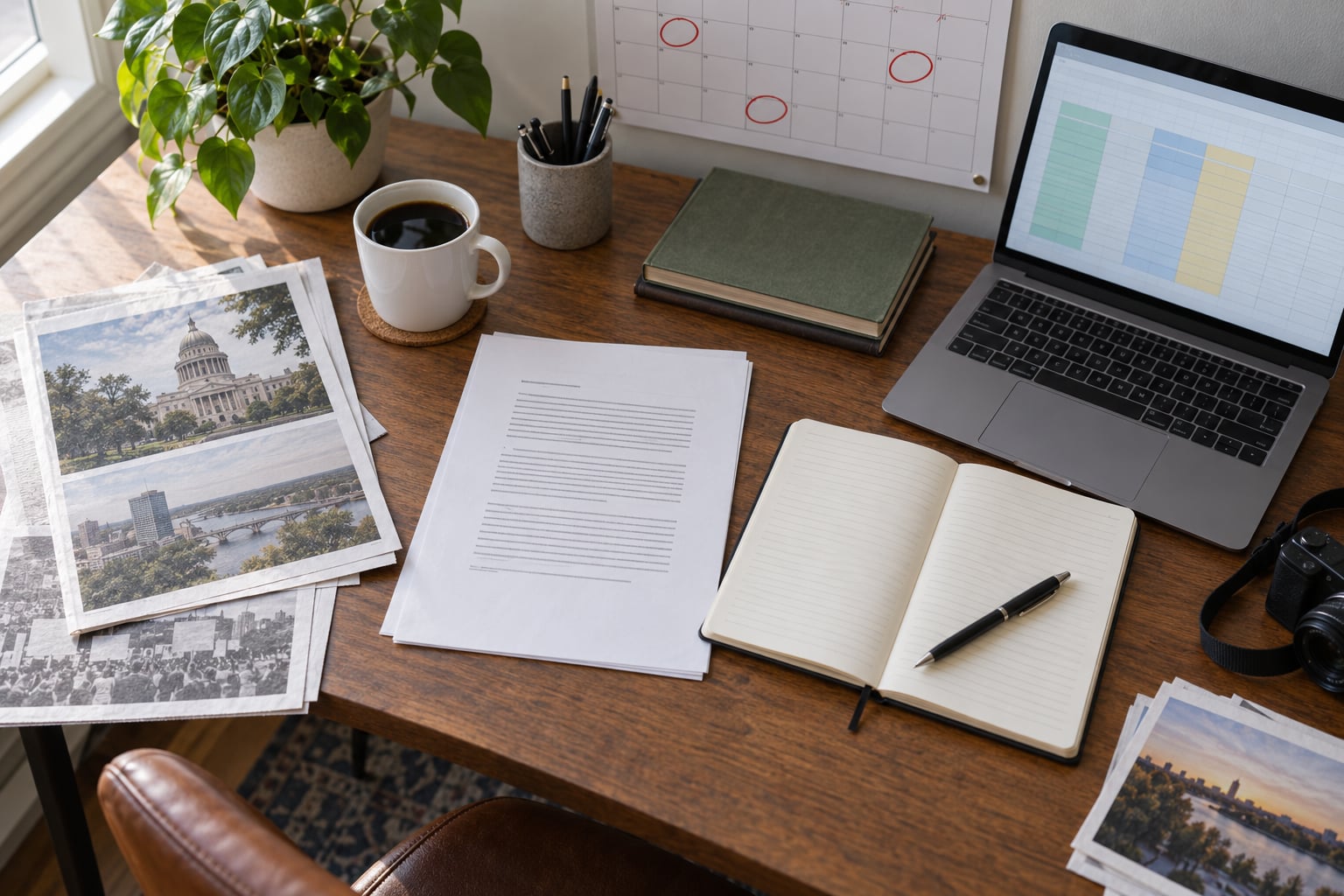
Beat boundaries. Note the institutions, offices, officials and geography you would cover, and the recurring events on the calendar. If you are applying for a local government job, that means the council, the planning commission, the clerk’s office and the meeting schedule.
Recent and planned coverage. Read the last three months of stories the outlet has published on that beat, plus anything already scheduled. You are looking for repeated narratives, missing voices and thin areas.
Audience questions. What do readers of that coverage ask for? A housing beat tends to produce questions about rents, evictions and development permits. Write down five real questions you have seen asked.
Source notes. Names, roles, contact details, how you found them and what each one actually knows. Specifics here do more work than adjectives anywhere else in the memo.
Records and data. Where the agendas live, which agency publishes the dataset, which docket to watch, and which request would take the longest. Public records access is slow, so start early.
Deadlines. The submission date, and any other application materials you can piggyback on.
The memo itself can live in a document, a spreadsheet or your newsroom’s project tool. Format matters less than structure: an editor should be able to skim yours in ninety seconds.
Step-by-Step: How to Build a Beat Memo
1. Define the beat and its boundaries
Open with one paragraph that says what the beat covers in plain terms. Name the institutions, the geography, the policy areas and the recurring meetings.
Then draw the line. Say what belongs to another reporter’s beat and what belongs to yours, because editors worry most about two people chasing the same council meeting. Finish with the questions the desk most needs answered. The step is done when a reader could describe your beat back to you without guessing.
2. Audit recent and planned coverage
Skim recent stories and flag patterns: the same narrative repeated, the same spokesperson quoted, the same neighborhood absent. This is where you prove you read the outlet rather than the job ad.
Do not list every published article. Mark four or five gaps and explain why they matter to readers. The step is complete when each gap points somewhere a reporter could actually go.
3. Build the source map with names, roles and numbers
This is the graded core of most beat memo assignments. A journalism class rubric I have seen asks for five sources, each with why the source is interesting, where the information exists and what problems you expect collecting it.
Group sources by role: officials, subject-matter experts, advocates, and people directly affected. Give each a name or a precise description, a role, a phone or email, how you found them and what they know that nobody else does.
One caution. If you have not contacted someone, describe the role rather than implying a relationship you do not have. Claiming a source you never called is the fastest way to lose trust in the rest of the memo.
4. Track unanswered questions and turn them into leads
A gap becomes a story idea when you pair it with something that could close it: a document, a dataset, a person, a meeting, a location.
Keep verified leads and unverified tips visibly separate, and note what evidence each one still needs. Honest gaps read as competence. Overclaiming reads as inexperience.
5. Set priorities, deadlines and next actions
Rank your questions so the most consequential one is first, then attach real next steps to each: request the records, book the interviews, pull the dataset, revisit an earlier story.
Put dates on them. A first 90 days sketch, even a rough one, tells the editor you can hold a cadence rather than waiting for a tip to land. The step is done when every priority has an owner and a date.
6. Keep the memo current
A memo goes stale fast, and a stale memo is worse than none. Update it after a major development, a source change, a published story or a newsroom meeting.
A monthly thirty minute pass is usually enough. Review the source list for dead links, check the calendar against reality, and move completed items into an archive section so the active list stays short.
Common Beat Memo Mistakes and the Fix for Each
Treating it as a list of story pitches
If the memo is eight ideas and nothing else, it reads as a pitch, not a coverage plan. Fix: keep story ideas to a third of the document and give the rest to sources, records and boundaries.
Loading it with background nobody asked for
History of the beat belongs in your head, not on the page. Fix: one sentence of context per topic, then move on to what you would do.
Ignoring the people the beat affects
A memo full of officials and experts and no residents signals who you plan to talk to. Fix: build the affected-community column first and see who is missing.
Writing unverified claims as fact
A confident assertion you cannot source is a liability. Fix: label every lead, and mark what you still need to confirm.
Stopping at priorities without next actions
Priorities without dates are wishes. Fix: one action, one owner, one date per line.
Confusing it with a cover letter
A cover letter argues for you. A beat memo demonstrates preparation. Fix: if a line is about your enthusiasm rather than the territory, cut it.
Three quick habits help. Keep the whole thing to two pages. Use headings an editor can skim. And write the source list last, when your research has filled in the gaps you started with.
Frequently Asked Questions
What is a beat memo in journalism?
A beat memo is a short document in which a journalist sets out how they understand a beat and how they would cover it. It usually covers the beat’s boundaries, the institutions involved, who the sources would be, which records and data exist, and what the reporter would try to publish first. Editors read it as a test of preparation rather than a test of enthusiasm.
How long should a beat memo be?
One to two pages is the safe range for most cases. Some editors specify a hard one-page limit in the job listing, so check the instructions before you draft. If no limit is given, aim for two pages with clear headings, because the goal is scannability. Every extra page dilutes the source list and the story ideas.
Should a beat memo include story ideas?
Yes, but keep them short and specific. Two or three ideas with a source or document attached read as preparation. A long list of speculative headlines reads as someone without a plan. Pair each idea with what would confirm it, and separate ideas you have verified from tips you are still chasing.
What is the difference between a beat memo and a story pitch?
A pitch argues for one specific story and asks for a go-ahead. A beat memo maps an entire territory: its boundaries, institutions, sources, records and priorities. The pitch asks whether to run a story today. The memo asks whether you could run that beat for a year. One newsroom document does both, but a candidate who confuses them usually writes too many ideas and too little coverage planning.
How often should a reporter update a beat memo?
Monthly is a workable rhythm for a working memo, with an immediate pass after any major development or source change. Set a recurring calendar reminder rather than relying on memory. The useful version is short, current and reviewed; the archived version nobody opens again.
Who should create and maintain a beat memo?
The reporter who holds the beat normally writes it and keeps it current, and the assigning editor reviews it at planning meetings. The same document gets reused in job applications, freelance pitches, new hire onboarding and classroom assignments. Whoever maintains it, the editor should be able to see who owns it and when it was last touched.
What to Do First
Start with the source list. Read the last three months of the outlet’s coverage and write down five people you would call, each with a role, a way to reach them and one thing they know. Everything else in how to build a beat memo gets easier once that list exists.