Hostile interview behaviour is any questioning that uses aggression, loaded questions, false premises or repeated personal challenge to knock you off balance rather than to get an accurate account. Knowing how to prepare for a hostile interview is mostly about moving yourself from reacting to responding.
That means deciding what you are there to say, knowing which subjects you will not discuss, and rehearsing short answers with the evidence attached. Most people who panic in these situations have never had to name their own boundaries out loud, so the moment somebody pushes, they improvise. Improvisation is where composure goes to die.
This guide works for two very different situations: the executive sitting down with a broadcast reporter who already dislikes the story, and the job candidate meeting an aggressive hiring manager or a deliberate stress interview. Same preparation, different vocabulary. In a newsroom you care about what is on the record. In a hiring room you care about what you will still be able to say about the place on Monday.
Budget ninety minutes of preparation and ten minutes on the day. It is not a lot of work, and it is the difference between a conversation and a scramble.
Table of Contents
- What You Need
- How to Prepare for a Hostile Interview: Step-by-Step
- 1. Define the outcome and non-negotiable boundaries
- 2. Research the interviewer and likely tactics
- 3. Build short, evidence-backed answers
- 4. Rehearse how to prepare for a hostile interview opening
- 5. Control tone without matching hostility
- 6. Recover from interruptions and traps
- 7. Close the interview deliberately
- Common Mistakes
- Frequently Asked Questions
What You Need
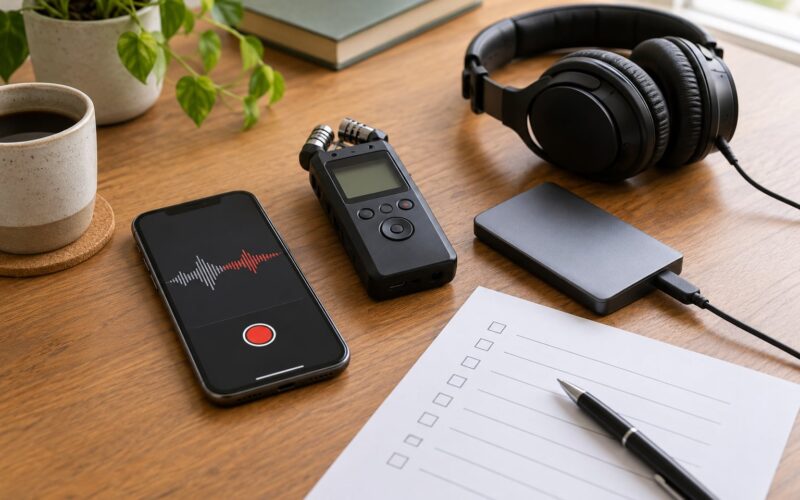
You cannot prepare for a hostile interview with a fuzzy sense of the subject. Get these on paper before you walk in, ideally the night before.
- One objective. A single sentence describing what must come out of the interview, however small. Not everything you know. One sentence.
- Verified background. Dates, figures and documents you can produce on request. If a number could be challenged, either confirm it or prepare to say you will confirm it later.
- Their likely lines of attack. The three things an unsympathetic interviewer would push hardest, written as questions.
- Your boundaries. Two or three subjects that are out of scope, with a one-line reason for each. A reason matters; a bare refusal reads as evasion.
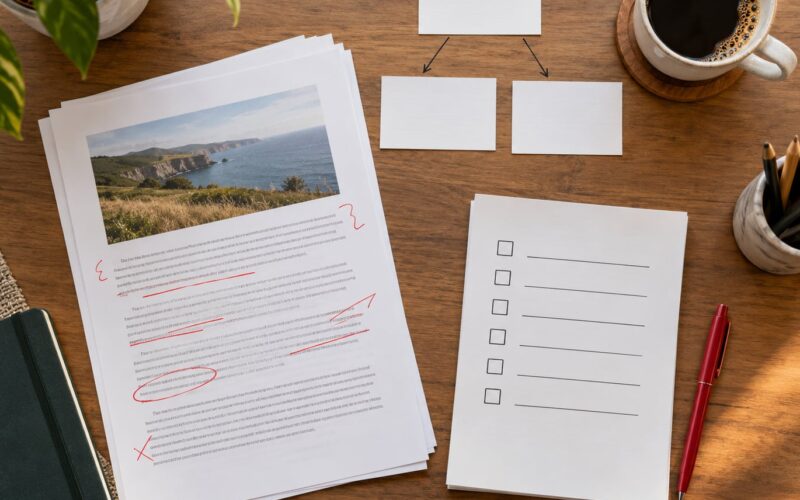
- An evidence pack. Reports, letters, timelines, screenshots. It changes the texture of the conversation when the answer is a document rather than an opinion.
- An opening statement and a closing statement. Thirty seconds each, written out. These are your floor and your roof.
- A note method. If one side of the conversation is on the record, agree in advance whether you are taking notes or asking to record, and say so out loud at the start.
- One named contact. A colleague, lawyer or adviser who knows you are doing this. Tell them the time and the place.
How to Prepare for a Hostile Interview: Step-by-Step

1. Define the outcome and non-negotiable boundaries
Write down the one thing that has to survive the interview, and the two or three topics that will not be discussed no matter how the question arrives. Everything else is negotiable.
Example: My objective is to establish that the timeline in the report matches the documented record. I will not discuss individual staff performance, pending legal matters, or anything involving a named individual who has not given consent.
Decide in advance where the interview ends for you. A specific trigger, written down while you are calm, gives you something to point at in the moment instead of deciding while your pulse is in your ears. A useful trigger is the third unannounced change of subject after you have already redirected once.
You will know this step worked if, five minutes into the interview, you can still answer the question you came to answer.
2. Research the interviewer and likely tactics
Read the last six months of their work. Not the flattering interviews, the ones where they open with a gotcha. You are looking for a signature move: the accusation in the first sentence, the hypothetical trap, the interview they ask with a hand over the mic.
Watch one clip with the sound off. Body language gives away pacing far better than audio does, and you will pick up the moment they intend to interrupt.
Also look up what has already been published about the story. Most hostile interviews do not attack the prepared answer, they attack something written months ago that you have not read since.
You will know this step worked if you can name their tactic before they use it, and therefore feel slightly bored when they do.
3. Build short, evidence-backed answers
Prepare three to five answers, each two or three sentences long, each with a document or a date attached. Write them as full sentences, because you will need the words under pressure and blank-page improvisation is where people invent things.
Every prepared answer follows the same shape: the answer, then the bridge, then the key message. The bridge is a phrase that lets you leave the attack without agreeing to its framing.
Here are the bridges worth memorising:
- Before I answer that, here is what is actually documented.
- That is a fair question, and the answer is no. What I can tell you about it is this.
- I am not going to speculate about that, but I can walk you through the sequence of events.
- You are asking me to answer for someone who is not in the room. I will stick to my own decisions.
- Let me set that aside for a second, because there is a more important point here.
Rehearse aloud. Written preparation feels fluent; spoken preparation is where you discover the answer is forty seconds long and you have no idea what the first sentence is.
You will know this step worked if you can answer a question you did not prepare for by using the same answer-plus-bridge structure.
4. Rehearse how to prepare for a hostile interview opening
The first ninety seconds set the temperature for everything after. Open with your statement, confirm the ground rules, and refuse to be hurried into an answer before the terms are clear.
A usable opening: Before we start, can we confirm who is on the record, whether this is being recorded, and whether there is a time limit? Then I would like to set out two things I want to cover.
Have responses ready for the standard early attacks. To an accusation: That is a fair characterisation of one part of it. Here is the rest. To bait: I am happy to go there, and I will start from the document. To the same question a third time: I have given you my answer twice. Let us move on, or I am happy to follow up in writing. To a question that tries to read your mind: I do not know what the other party intended, and I will not guess on the record.
You will know this step worked if the first answer you give is a full sentence rather than a fragment.
5. Control tone without matching hostility
Your job is to be boring. Flat, unhurried, faintly pleasant tone does more to defuse an aggressive questioner than any clever rebuttal, because there is nothing to push against.
Three habits carry most of it. Pause before you answer, long enough that it feels long to you and normal to them. Drop your volume slightly rather than raising it, which reads as control rather than retreat. Keep your hands visible and your shoulders down, because a person who has not decided to fight does not need to signal it.
Slow your breathing out. In for four, out for six, three times, before you go in and once whenever you notice your heart rate climbing. It sounds trivial. It works because the exhale is the part your body cannot fake calm about.
Allow yourself one honest sentence about the dynamic if it is being made unbearable: It feels like we keep coming back to the same point, so I want to check what I can usefully add. Naming the tension out loud often lowers it, because now you are both describing it rather than one of you enduring it.
You will know this step worked if, afterwards, nobody can quote a moment where you raised your voice.
6. Recover from interruptions and traps
Interruption is the tactic most people lose to, because the instinct is to speed up and speed up sounds like panic. Instead, stop. Finish the sentence in your head, then pick up the thread out loud.
When you get cut off twice: I want to finish this thought, it is one sentence, and then the answer is yours. Keep the volume level. Repeated interruption of a person who stays level and stays on topic is visible to everyone, including the camera.
Other traps worth having a script for. The hypothetical trap, where a made-up scenario invites you to speculate: I will not answer for a hypothetical person. Here is what I can tell you about the real one. The forced choice: It is not an either-or, and the false choice is doing the work here. The manufactured deadline: I can give you what you need today, but not on a deadline set by the interview. Send me the questions in writing.
You will know this step worked if you finished each of your prepared points at least once.
7. Close the interview deliberately
Do not let the last thing on the record be their framing. When the questions run out, say so and take the floor back.
A closing script: Before we finish, I want to make sure I have been clear on the two points I came to cover. I will send you the document I mentioned and the figures by tomorrow, and if anything I have given you today is wrong, I would like to correct it quickly rather than have it sit there.
That last clause matters more than it looks. Offering a correction path signals that you are not defensive, and it makes an inaccurate piece harder to run without checking with you.
If the tactics continue to the end, exit without a scene: I think we have both got what we came for. I am happy to help with anything specific in writing, and I am going to leave it there. Then leave. Say the last sentence, not the last retort.
You will know this step worked if your key message is in the first two minutes of any resulting clip, not the last.
Common Mistakes
Almost every avoidable loss in a hostile interview comes from one of these.
- Overexplaining. A long answer gives the interviewer something to interrupt. Give the point, the evidence, and stop. Silence after a complete answer is not weakness, and training coaches flag clipped one-word answers as sounding defensive for the same reason.
- Arguing the premise. Correcting the question instead of answering the substance hands over control of the frame. Acknowledge in one clause, then bridge.
- Improvising facts. If you do not know, say you do not know and say when you will find out. One invented figure can follow you for years.
- Using their language. Hostile word choices repeated back by you become the story’s quotes. Use neutral, boring nouns.
- Rehearsing every word. Memorised delivery collapses the moment the question changes by one word. Memorise structure and evidence, not sentences.
- Failing to set limits. No boundary means no argument either, because you have not defined what you are protecting. Decide your walk-away trigger before the room heats up.
- Letting silence become panic. A pause is a tool. Practise it out loud so it does not feel like you have stopped breathing.
If you get only one thing right, get the preparation pack right: objective, boundaries, three documented answers, five bridges. Everything else in this guide is delivery, and delivery is worth less than substance.
Frequently Asked Questions
How do I know when to end a hostile interview?
End it when the conversation has stopped producing usable material and the pattern is deliberate rather than accidental. The clearest signals are repeated interruption of a complete answer, questions that keep reshaping what you already answered accurately, and personal remarks with no news content attached. Give one clear warning first, naming the behaviour and asking for space to finish, then end it if it continues. Write the last sentence yourself rather than matching their tone, and offer corrections in writing afterwards.
How should I answer a question that contains a false premise?
Do not argue the premise at length, because that keeps their framing on the record. Use one clause to correct it, then move straight to what you can substantiate. A workable line is: that is not quite accurate, and here is what the document actually shows. Correct once, clearly, and if they repeat the false version later, repeat your correction once more and stop. Three corrections establish the record; ten just make the exchange the story.
What if the interviewer interrupts me every time I speak?
Stop talking, wait for the silence, and then resume from the beginning of the sentence you were on. Do not speed up, and do not raise your voice to compete. If it happens twice, say plainly that you would like to finish one thought before they respond, and stay level while saying it. The behaviour is visible to the audience even when it is invisible to you, which is exactly why a person who does not react to it tends to be the one remembered as composed.
Should I fact-check answers live during a hostile interview?
Correct anything factually wrong in the moment, briefly and without emotion, because a live correction is easier to run than a printed one. Do not fact-check opinions, motives or the framing itself, and do not get pulled into sourcing arguments. If a figure needs work, commit to a specific time by which you will confirm it, then send it. Anything beyond a factual correction is better handled afterwards in writing, where you can control the wording and there is no clock running.
How do I prepare when I do not know who will conduct the interview?
Assume you are facing someone who has already read everything available about you and has a view about it. Prepare on the public record, not on the individual, and rehearse against the most hostile plausible version of your story rather than the friendliest one. Write your boundaries as general rules, such as no speculation and no third-party opinions, so they apply to anyone. Then ask about the format when you get the chance, since format dictates far more than the interviewer’s temperament does.
Start with paper, not with breathing exercises. Write your objective in one sentence, your boundaries in two, and three answers with the evidence attached to each. If you only follow one piece of advice here, make it the first thirty minutes of preparation rather than the last thirty seconds of composure. People learn how to prepare for a hostile interview once, and the ones who do it properly are recognisable in the first answer.